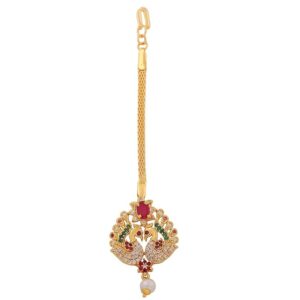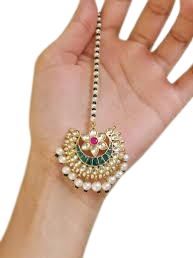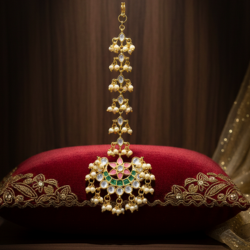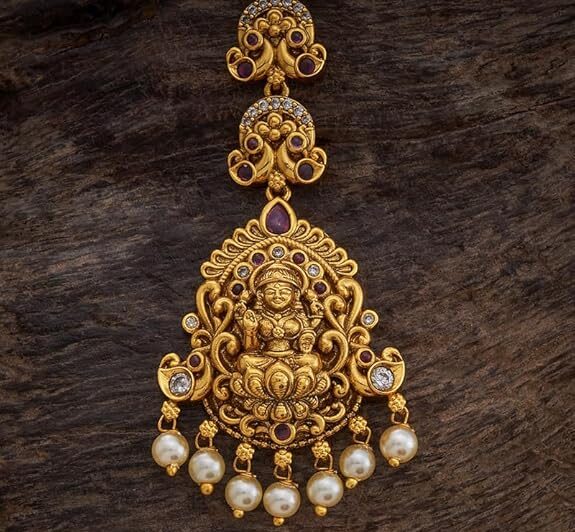
Kushal’s 1st Fashion best earring and maang tikka set Jewellery

630.00

earring and maang tikka set

Material
Precious Metal
Metal type
Gold Plated Copper
Gem type
Created Ruby
Country of Origin
India

Description

Color : Ruby

  • Plating : Gold Plated

    earring and maang tikka set

  • Product name : Antique Tikka
  • Care Instructions: Avoid contact with water, perfumes and cosmetics. Store in zip-lock plastic pouches or butter paper after use. Do not store in Jewellery boxes or Velvet boxes.
  • Disclaimer: Product color may slightly vary due to photographic lighting sources.

Additional Information

Manufacture
Kushal’s Fashion Jewellery, Kushal’s Retail Pvt. earring and maang tikka set Ltd. #54/2, 2nd Floor, Police Station Road, Basavanagudi, Bangalore 560004
Packer
Kushal’s Retail Pvt. Ltd. #54/2, 2nd Floor, Police Station Road, Basavanagudi, Bangalore 560004
Item Weight
13 g
Net Quantity

1.00 Count

In-Depth Description of Mangtika:

The mangtika, also popularly known as the earring and maang tikka set maang tikka, is a cherished and iconic ornament in Indian culture, deeply intertwined with tradition, spirituality, and aesthetics. It is primarily worn by brides as part of their wedding ensemble but has long transcended its ceremonial roots to become a symbol of feminine beauty and cultural pride.

Historical and Cultural Significance:

The origin of the mangtika can be traced back to ancient Indian history, where jewelry was not only a symbol of wealth but also a marker of social status, religion, and marital status. The mangtika holds a sacred place in Hindu mythology and rituals. The forehead, where the mangtika rests, is considered the site of the ajna chakra—often called the “third eye” or the seat of intuition and spiritual wisdom. Wearing the mangtika is believed to awaken this chakra, bringing balance, clarity, and protection to the wearer. earring and maang tikka set

In traditional Hindu weddings, the mangtika is an essential part of the solah shringar—the sixteen adornments that a bride wears to look her most beautiful. It represents the bride’s commitment to her new life and her respect for cultural heritage. The pendant typically sits on the bride’s forehead, symbolizing the union of the masculine and feminine energies, and the connection between the spiritual and material worlds.

Design and Craftsmanship:

The design of the mangtika varies greatly across different regions of India, reflecting the diverse artistic traditions and cultural nuances. In North India, mangtikas are often elaborate with gold and kundan work, featuring precious stones and pearls. In South India, temple jewelry designs with motifs of gods and goddesses are common, often crafted in gold with intricate detailing.

The central pendant can take many forms—teardrop shapes, circular medallions, floral patterns, or abstract motifs—each carrying unique symbolism or family heritage. The chain, usually thin and delicate, is meant to sit comfortably along the parting of the hair, ensuring that the ornament is both secure and visible. earring and maang tikka set

Symbolism and Spiritual Meaning:

More than just a decorative piece, the mangtika carries profound spiritual symbolism. Positioned over the ajna chakra, it is said to enhance concentration and intuition, qualities essential for a balanced and harmonious life. In some interpretations, it is also seen as a representation of the union between the bride and groom, the convergence of two souls destined to share their lives.

Modern Adaptations and Fashion:

While traditionally a bridal accessory, the mangtika has evolved in modern fashion. Designers today experiment with materials, sizes, and styles, creating mangtikas suitable for festive wear, parties, and even casual ethnic outfits. Contemporary designs may incorporate silver, oxidized metals, beads, or minimalist aesthetics, making the mangtika a versatile accessory for women of all ages.

It has also found its place in global fashion,nearring and maang tikka set worn on runways and at cultural events, symbolizing a fusion of tradition and modernity. Celebrities and fashion influencers have popularized the mangtika beyond Indian borders, highlighting its beauty and cultural significance on international platforms. earring and maang tikka set

Cultural Variations:

Across India, different communities have their own unique takes on the mangtika. For example:

  • In Rajasthan and Gujarat, brides often wear a borla or rakhdi, a round, dome-shaped mangtika.

  • Punjabi brides typically opt for a broader, more embellished tikka. earring and maang tikka set

  • In South India, the mangtika may be integrated into the hairline jewelry ensemble, paired with jasmine flowers and other traditional adornments. earring and maang tikka set

Each variation not only adds to the aesthetic appeal but also carries the legacy of regional customs and artistic heritage.

.
Detailed Description of Mangtika:

The mangtika, also known as maang tikka, is a earring and maang tikka set quintessential piece of traditional Indian jewelry that holds a special place in the hearts and wardrobes of women, especially brides. This elegant ornament is worn on the forehead, with a chain that is carefully placed along the parting of the hair (called the maang), and a pendant or decorative piece that rests on the forehead’s center, just above the eyebrows. The word “mangtika” itself is derived from “maang” meaning forehead and “tikka” meaning a mark or ornament, highlighting its significance as a central decorative element. earring and maang tikka set

Traditionally, the mangtika symbolizes the union of the bride and groom, representing the sacred bond of marriage. It is often worn during weddings and other auspicious occasions, serving not only as an adornment but also as a cultural emblem. The pendant usually features intricate craftsmanship and may be embellished with precious or semi-precious stones such as diamonds, rubies, emeralds, pearls, or kundan work, adding a touch of regality and grandeur. earring and maang tikka set

The design of mangtikas varies greatly across different earring and maang tikka set regions and communities in India. Some are simple and delicate, while others are elaborate and heavy, adorned with multiple layers and intricate detailing. The chain is typically designed to be lightweight and flexible so it sits comfortably along the hairline. The central pendant may take various shapes—floral motifs, geometric patterns, or traditional symbols—each carrying its own cultural meaning. earring and maang tikka set

Beyond weddings, the mangtika has evolved into a versatile accessory that complements modern ethnic and fusion wear, making appearances in fashion shows and festive celebrations. It highlights the wearer’s facial features, especially enhancing the forehead and the eyes, adding earring and maang tikka set grace and an aura of tradition and femininity.

In essence, the mangtika is not just a piece of jewelry; it is a beautiful expression of cultural heritage, spirituality, and personal style that has transcended generations, continuing to captivate and adorn women with its timeless charm.


Would you like me to add historical context, cultural variations, or styling tips as well?

You said:
more earring and maang tikka set
ChatGPT said:

Sure! Here’s an even more detailed and enriched description of the mangtika, covering history, symbolism, cultural variations, and modern relevance:


In-Depth Description of Mangtika:

The mangtika, also popularly known as the maang tikka, is a cherished and iconic ornament in Indian culture, deeply intertwined with tradition, spirituality, and aesthetics. It is primarily worn by brides as part of their wedding ensemble but has long transcended its ceremonial roots to become a symbol of feminine beauty and cultural pride.

Historical and Cultural Significance:

The origin of the mangtika can be traced back to ancient Indian history, where jewelry was not only a symbol of wealth but also a marker of social status, religion, and marital status. The mangtika holds a sacred place in Hindu mythology and rituals. The forehead, where the mangtika rests, is considered the site of the ajna chakra—often called the “third eye” or the seat of intuition and spiritual wisdom. Wearing the mangtika is believed to awaken this chakra, bringing balance, clarity, and protection to the wearer.

In traditional Hindu weddings, the mangtika is an essential part of the solah shringar—the sixteen adornments that a bride wears to look her most beautiful. It represents the bride’s commitment to her new life and her respect for cultural heritage. The pendant typically sits on the bride’s forehead, symbolizing the union of the masculine earring and maang tikka set and feminine energies, and the connection between the spiritual and material worlds.

Design and Craftsmanship:

The design of the mangtika varies greatly across different regions of India, reflecting the diverse artistic traditions and cultural nuances. In North India, mangtikas are often elaborate with gold and kundan work, featuring precious stones and pearls. In South India, temple jewelry designs with motifs of gods and goddesses are common, often crafted in gold with intricate detailing.

The central pendant can take many forms—teardrop shapes, earring and maang tikka set  circular medallions, floral patterns, or abstract motifs—each carrying unique symbolism or family heritage. The chain, usually thin and delicate, is meant to sit comfortably along the parting of the hair, ensuring that the ornament is both secure and visible. vearring and maang tikka set

Symbolism and Spiritual Meaning:

More than just a decorative piece, the mangtika carries profound spiritual symbolism. Positioned over the ajna chakra, it is said to enhance concentration and intuition, qualities essential for a balanced and harmonious life. In some interpretations, it is also seen as a representation of the union between the bride and groom, the convergence of two souls destined to share their lives.

Modern Adaptations and Fashion:

While traditionally a bridal accessory, earring and maang tikka set the mangtika has evolved in modern fashion. Designers today experiment with materials, sizes, and styles, creating mangtikas suitable for festive wear, parties, and even casual ethnic outfits. Contemporary designs may incorporate silver, oxidized metals, beads, or minimalist aesthetics, making the mangtika a versatile accessory for women of all ages. earring and maang tikka set

It has also found its place in global fashion, worn on runways and at cultural events, symbolizing a fusion of tradition and modernity. Celebrities and fashion influencers have popularized the mangtika earring and maang tikka set beyond Indian borders, highlighting its beauty and cultural significance on international platforms.

Cultural Variations: earring and maang tikka set

Across India, different communities have their own unique takes on the mangtika. For example:

  • In Rajasthan and Gujarat, brides often wear a borla or rakhdi, a round, dome-shaped mangtika.

  • Punjabi brides typically opt for a broader, more embellished tikka. earring and maang tikka set

  • In South India, the mangtika may be integrated into the hairline jewelry ensemble, paired with jasmine flowers and other traditional adornments. earring and maang tikka set

Each variation not only adds to the aesthetic appeal but also carries the legacy of regional customs and artistic heritage.


In summary, the mangtika is much more than an ornament—it is a beautiful fusion of art, spirituality, culture, and identity. It tells the story of Indian womanhood, tradition, and elegance, earring and maang tikka set making it an everlasting symbol of beauty that transcends time and trends.


Would you like me to help with a specific style of writing, such as poetic, academic, or for a product description? earring and maang tikka set

Reviews

There are no reviews yet.

Be the first to review “Kushal’s 1st Fashion best earring and maang tikka set Jewellery”

Your email address will not be published. Required fields are marked *

Go to Top