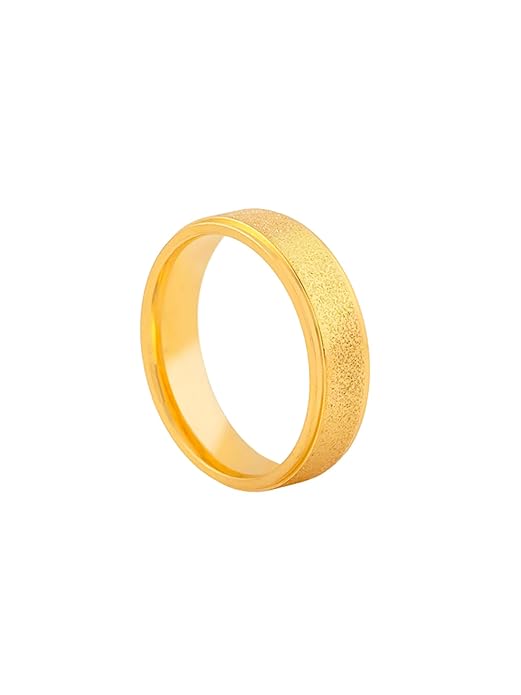
gold finger ring
Ring size
9
Material type
Stainless Steel
Metal type
Titanium
Gem type
No Gemstone
Occasion type
Anniversary, Birthday
Item type name
Fashion Jewellery
Country of Origin
India
Original price was: ₹1,071.00.₹209.00Current price is: ₹209.00.
PERFECT ACCESSORY: Level up your everyday look with these gold finger ring stainless steel golden band rings from Yellow Chimes. Durable enough for anything, stylish enough for everything!
A gold finger ring is a seemingly simple object — a small loop of precious metal worn on the finger — yet it embodies a universe of meanings, stories, and artistry. This sacred band is not merely an ornament; it is an artifact that carries with it the weight of history, social identity, personal milestones, and cultural symbolism.
Through the lens of art, history, and human experience, this extensive description explores the gold finger ring from every possible angle: its material essence, design diversity, symbolic richness, cultural significance across civilizations, the artistry of its making, its role in personal and collective memory, and its continued evolution in the modern world. gold finger ring
Gold, a chemical element symbolized as Au, has fascinated humanity since ancient times because of its unique properties. Its warm, radiant glow is unmatched by any other metal, and its chemical inertness makes it immune to tarnish, rust, or decay.
The naturally occurring yellow hue of pure gold, combined with its softness and malleability, allows it to be shaped into intricate forms without losing its inherent luster. The metal can be hammered thin into sheets (gold leaf), drawn into fine wires, or cast into complex shapes, making it the ideal medium for jewelry. gold finger ring
gold finger ring
The karat system quantifies gold’s purity. Pure gold is 24 karats, but due to its softness, jewelers alloy it with other metals for durability:
24K (Pure Gold): Almost never used alone for rings because it bends easily.
22K (91.7% Gold): Common in Indian and Middle Eastern jewelry, prized for rich color.
18K (75% Gold): Standard for luxury jewelry worldwide, offering a balance between purity and strength.
14K (58.3% Gold): Popular in the U.S., more durable and affordable.
10K (41.7% Gold): The minimum karat legally classified as gold in the U.S., most durable. gold finger ring
Each alloy mix affects not only strength but color and wearability. For example, white gold includes palladium or nickel; rose gold is rich in copper.
The color variations have their own emotional and cultural resonances:
Yellow Gold: The classic gold color, symbolizing warmth, prosperity, and timelessness.
White Gold: Modern and sleek, often associated with purity, technology, and understated elegance.
Rose Gold: A vintage favorite with a romantic blush, evoking nostalgia and softness.
Green Gold: A rarer alloy with a subtle greenish hue, historically linked to nature and fertility.
The subtlety of these colors offers endless opportunities for designers to express mood and style. gold finger ring
At its core, the ring’s structure is the band, a continuous circle symbolizing infinity and wholeness.
Thickness & Width: Thin bands (1-3 mm) convey delicacy; thicker bands (6 mm or more) express strength and presence.
Shape: Traditional bands are rounded (comfort fit) or flat (modern and minimalist). Some have beveled edges or are shaped ergonomically to fit the finger.
Texture: From high-polish mirror finish to matte, brushed, hammered, or sandblasted, texture alters the ring’s tactile and visual experience. gold finger ring
Gold rings become canvases for artists through various embellishments:
Engraving: Custom inscriptions, initials, dates, or patterns etched into the band. Ancient rings often featured coded messages or blessings.
Filigree: Delicate wirework creating lace-like designs, popular in Victorian and Art Nouveau periods.
Milgrain: Tiny beads bordering edges for vintage detailing.
gold finger ring
Granulation: Tiny gold spheres fused onto surfaces, a technique tracing back to ancient Etruscan craftsmanship. gold finger ring
Adding gems elevates the ring from pure metalwork to a jewel of artistry.
Diamond: The classic stone of eternal love, known for its unmatched brilliance.
Colored Gemstones: Rubies (passion), sapphires (wisdom), emeralds (growth), and other precious stones each bring symbolism.
Birthstones: Personalized rings often feature the wearer’s birth month gem. gold finger ring
Setting Styles: Prong, bezel, channel, pavé, tension settings — each affects how light plays on the gem and the ring’s profile.
The circular shape, without beginning or end, symbolizes eternity, unity, and cyclic nature. Across cultures, the circle has been used in religious, philosophical, and social contexts to represent wholeness.
Gold wedding bands symbolize an unbroken bond, a promise made public and sacred. The choice of gold highlights the value and endurance of this commitment. gold finger ring
Historically, rulers, clergy, and nobles used gold rings as badges of authority and wealth. Signet rings bore family crests, sealing documents and asserting identity. gold finger ring
In various traditions, gold rings serve as amulets against evil, or conduits for divine power. Rings inscribed with prayers, runes, or symbols serve as spiritual talismans.
gold finger ring
Egyptian Rings: Often made of gold with motifs like scarabs, symbolizing rebirth and protection.
Roman Rings: Signet rings used for official seals; gold rings marked citizenship.
gold finger ring Greek Rings: Featured mythological scenes or inscriptions, worn by citizens and nobility.
In the Middle Ages, rings became gifts of love and status. Ecclesiastical rings signified religious authority. Posy rings bore romantic poetry. gold finger ring
Gold rings reflected Renaissance art’s flourishing creativity, incorporating enamel, gemstones, and symbolic motifs. Victorian rings often conveyed mourning or remembrance, featuring black enamel and hairwork.
In India, gold rings are essential in wedding ceremonies and symbolize prosperity and blessings. Chinese culture values gold for its association with luck and wealth. gold finger ring
From sketches to detailed CAD renderings, design shapes the vision. Designers balance aesthetics, ergonomics, and material limitations.
The lost wax method remains a dominant technique for translating design into gold form. Wax models allow intricate details. gold finger ring
Hand crafting involves cutting, soldering, shaping, and polishing, requiring years of skill. gold finger ring
Gem setting is a meticulous task, demanding precision to secure stones without damage.
Polishing, plating (rhodium for white gold), and engraving finalize the piece. gold finger ring
Gold rings often mark milestones — engagements, weddings, anniversaries, achievements. They carry sentimental value far beyond material worth, becoming carriers of memory, identity, and promise.
Sustainability, ethical sourcing, and technological advancements are shaping gold ring production and design today. From conflict-free gold mining to 3D printing and smart rings with embedded technology, the gold ring continues to evolve. gold finger ring
The gold finger ring remains a jewel of humanity’s artistic and cultural heritage. Its timeless appeal lies not just in precious metal and skilled craftsmanship, but in its capacity to embody the deepest human emotions and values. Each gold ring tells a story—of love, power, faith, and identity—woven through generations, shining bright with the promise of eternity. gold finger ring
gold finger ring
Introduction
A gold finger ring is far more than just a piece of jewelry. It is a symbol, an heirloom, an expression of identity, and an artifact of artistic and cultural heritage. Crafted from one of the most precious metals known to humanity, gold rings have adorned fingers across civilizations for millennia. Their allure lies not only in their gleaming beauty but in the rich tapestry of meaning, craftsmanship, and tradition woven into each band. gold finger ring
This extensive description delves into the anatomy of a gold finger ring, exploring its physical attributes, symbolic meanings, cultural importance, artistic variations, and the sophisticated craftsmanship behind its creation. Whether a minimalist band or an intricate masterpiece, a gold finger ring epitomizes elegance, endurance, and personal significance. gold finger ring
At the heart of any gold ring is its material—the gold itself. Gold, a naturally occurring precious metal, has been treasured since antiquity for its radiant luster, malleability, and resistance to corrosion.
Purity and Karats
Gold is rarely used in its purest form (24 karats) for jewelry because pure gold is soft and prone to bending or scratching. Instead, it is alloyed with other metals to enhance strength and durability. Common purities include 22K (91.7% pure), 18K (75%), 14K (58.3%), and 10K (41.7%). The choice of karat affects the color, weight, and value of the ring. gold finger ring
Colors of Gold
Though traditionally yellow, gold jewelry comes in various hues depending on alloy metals:
Yellow Gold: Classic and warm, often mixed with copper and silver.
White Gold: Alloyed with metals like palladium or nickel and often rhodium-plated for a silvery sheen.
Rose Gold: Contains higher copper content, giving it a pinkish tint, evoking romance and vintage charm.
Green Gold: A rarer form with silver, offering a subtle greenish tint. gold finger ring
A gold ring may seem simple—a circle of precious metal—but the design intricacies are vast, ranging from minimalist elegance to ornate extravagance. gold finger ring
Band Styles
The band is the ring’s foundation. It can be:
Plain Band: Smooth, polished gold, representing simplicity and purity.
Textured Band: Features hammered, brushed, matte, or sandblasted finishes for unique tactile and visual effects.
Carved or Engraved Band: Intricately etched with patterns, symbols, or personalized messages.
Split Shank: Where the band splits into multiple parts near the setting, adding complexity and style.
Width and Thickness
Rings come in various widths, from ultra-thin delicate bands (1-2mm) to broad statement pieces (8mm or more). Thickness affects comfort and durability, balancing sturdiness with wearability.
Settings and Embellishments
While a plain gold band speaks for itself, many rings feature adornments:
Gemstones: Diamonds, sapphires, rubies, emeralds, or birthstones set in prongs, bezels, or channels.
Filigree: Delicate metalwork patterns of twisted gold wire, creating lace-like designs.
Milgrain: Tiny bead-like details along edges for vintage appeal.
Inlays: Contrasting materials like wood, enamel, or other metals embedded into the band. gold finger ring
The gold finger ring is deeply symbolic across cultures and contexts, carrying layers of significance.
Eternal Love and Commitment
Most famously, gold rings are associated with marriage and engagement. The unbroken circle represents eternity, unity, and the cyclical nature of life. The choice of gold signifies enduring value and unchanging loyalty. gold finger ring
Status and Wealth
Historically, gold rings have denoted social status, power, and wealth. In many cultures, only the elite or nobility wore gold rings to signify rank.
Spiritual and Religious Significance
Rings can be talismans or amulets. In various traditions, they symbolize divine favor or spiritual authority. Clergy and royalty often wear rings as a mark of office.
Personal Identity
Beyond communal meaning, gold rings express personal style, milestones, or identity. Signet rings, engraved with family crests or initials, serve as personal emblems.
gold finger ring
Gold finger rings have evolved through centuries, reflecting changing tastes, technologies, and social norms.
Ancient Civilizations
Egypt: Pharaohs wore gold rings embedded with symbols like the scarab beetle for protection.
Rome: Gold rings indicated citizenship and were sometimes inscribed with mottos.
India: Gold jewelry, including rings, is central to cultural rituals and marriage ceremonies, symbolizing prosperity and divine blessing.
Medieval and Renaissance Europe
Rings became highly decorative, often featuring religious motifs, enamel work, and intricate craftsmanship. Love tokens and “posy rings” engraved with romantic verses were popular. gold finger ring
Modern Era
Advances in metallurgy and design have expanded possibilities, from mass production to bespoke artisan creations. Gold rings remain central to ceremonies and fashion.
Creating a gold ring is a journey of artistry, precision, and technical mastery.
Design Conceptualization
The process begins with sketches or computer-aided design (CAD) models. This phase defines dimensions, aesthetics, and technical specifications.
Melting and Alloying
Pure gold is melted and mixed with other metals to achieve the desired karat and color. gold finger ring
Casting and Forming
Lost Wax Casting: A wax model is coated in plaster; when heated, the wax melts away, leaving a mold into which molten gold is poured.
Hand Fabrication: Skilled artisans shape and solder gold sheets or wires to create the ring.
Stone Setting and Decoration
Gemstones are precisely placed, requiring delicate work to secure without damage. Decorative elements like engraving or filigree are added by hand.
Polishing and Finishing
Multiple polishing stages bring out the gold’s shine or matte texture, finalizing the ring’s tactile and visual appeal.
Owning a gold ring entails understanding its care and proper wear.
Comfort and Fit
Rings must fit snugly yet comfortably. Sizes vary, and slight differences affect how the ring feels throughout daily activities.
Daily Wear and Durability
Gold’s softness means care is needed to avoid scratches and dents. White gold requires occasional re-plating to maintain its shine.
Cleaning and Maintenance
Gentle cleaning with mild soap, warm water, and a soft brush preserves brilliance. Professional polishing and inspection prolong the ring’s life. gold finger ring
Gold rings continue to evolve with fashion, technology, and societal changes.
Sustainable and Ethical Gold
Increasing demand for conflict-free and eco-friendly gold influences sourcing and manufacturing.
Customization and Personalization
Advances in 3D printing and laser engraving allow unique, tailored designs.
Fusion with Other Materials
Mixing gold with alternative materials—carbon fiber, wood, ceramics—creates innovative hybrid styles.
Minimalism vs. Maximalism
Both understated bands and extravagant, gemstone-encrusted rings enjoy popularity, reflecting diverse tastes.
A gold finger ring embodies beauty, craftsmanship, and profound meaning. It connects the wearer to a rich lineage of cultural traditions and personal stories. Whether given as a symbol of love, worn as a statement of identity, or cherished as a family heirloom, the gold ring shines with an eternal glow—reflecting light, life, and legacy.
A gold finger ring is a seemingly simple object — a small loop of precious metal worn on the finger — yet it embodies a universe of meanings, stories, and artistry. This sacred band is not merely an ornament; it is an artifact that carries with it the weight of history, social identity, personal milestones, and cultural symbolism.
Through the lens of art, history, and human experience, this extensive description explores the gold finger ring from every possible angle: its material essence, design diversity, symbolic richness, cultural significance across civilizations, the artistry of its making, its role in personal and collective memory, and its continued evolution in the modern world.
Gold, a chemical element symbolized as Au, has fascinated humanity since ancient times because of its unique properties. Its warm, radiant glow is unmatched by any other metal, and its chemical inertness makes it immune to tarnish, rust, or decay.
The naturally occurring yellow hue of pure gold, combined with its softness and malleability, allows it to be shaped into intricate forms without losing its inherent luster. The metal can be hammered thin into sheets (gold leaf), drawn into fine wires, or cast into complex shapes, making it the ideal medium for jewelry.
The karat system quantifies gold’s purity. Pure gold is 24 karats, but due to its softness, jewelers alloy it with other metals for durability:
24K (Pure Gold): Almost never used alone for rings because it bends easily.
22K (91.7% Gold): Common in Indian and Middle Eastern jewelry, prized for rich color.
18K (75% Gold): Standard for luxury jewelry worldwide, offering a balance between purity and strength.
14K (58.3% Gold): Popular in the U.S., more durable and affordable. gold finger ring
10K (41.7% Gold): The minimum karat legally classified as gold in the U.S., most durable.
Each alloy mix affects not only strength but color and wearability. For example, white gold includes palladium or nickel; rose gold is rich in copper.
The color variations have their own emotional and cultural resonances:
Yellow Gold: The classic gold color, symbolizing warmth, prosperity, and timelessness.
White Gold: Modern and sleek, often associated with purity, technology, and understated elegance.
Rose Gold: A vintage favorite with a romantic blush, evoking nostalgia and softness.
Green Gold: A rarer alloy with a subtle greenish hue, historically linked to nature and fertility. gold finger ring
The subtlety of these colors offers endless opportunities for designers to express mood and style.
At its core, the ring’s structure is the band, a continuous circle symbolizing infinity and wholeness.
Thickness & Width: Thin bands (1-3 mm) convey delicacy; thicker bands (6 mm or more) express strength and presence.
Shape: Traditional bands are rounded (comfort fit) or flat (modern and minimalist). Some have beveled edges or are shaped ergonomically to fit the finger.
Texture: From high-polish mirror finish to matte, brushed, hammered, or sandblasted, texture alters the ring’s tactile and visual experience. gold finger ring
Gold rings become canvases for artists through various embellishments:
Engraving: Custom inscriptions, initials, dates, or patterns etched into the band. Ancient rings often featured coded messages or blessings.
Filigree: Delicate wirework creating lace-like designs, popular in Victorian and Art Nouveau periods.
Milgrain: Tiny beads bordering edges for vintage detailing.
Granulation: Tiny gold spheres fused onto surfaces, a technique tracing back to ancient Etruscan craftsmanship. gold finger ring
Adding gems elevates the ring from pure metalwork to a jewel of artistry.
Diamond: The classic stone of eternal love, known for its unmatched brilliance.
Colored Gemstones: Rubies (passion), sapphires (wisdom), emeralds (growth), and other precious stones each bring symbolism.
Birthstones: Personalized rings often feature the wearer’s birth month gem.
Setting Styles: Prong, bezel, channel, pavé, tension settings — each affects how light plays on the gem and the ring’s profile. gold finger ring
The circular shape, without beginning or end, symbolizes eternity, unity, and cyclic nature. Across cultures, the circle has been used in religious, philosophical, and social contexts to represent wholeness.
Gold wedding bands symbolize an unbroken bond, a promise made public and sacred. The choice of gold highlights the value and endurance of this commitment.
Historically, rulers, clergy, and nobles used gold rings as badges of authority and wealth. Signet rings bore family crests, sealing documents and asserting identity.
In various traditions, gold rings serve as amulets against evil, or conduits for divine power. Rings inscribed with prayers, runes, or symbols serve as spiritual talismans. gold finger ring
Egyptian Rings: Often made of gold with motifs like scarabs, symbolizing rebirth and protection.
Roman Rings: Signet rings used for official seals; gold rings marked citizenship.
Greek Rings: Featured mythological scenes or inscriptions, worn by citizens and nobility.
In the Middle Ages, rings became gifts of love and status. Ecclesiastical rings signified religious authority. Posy rings bore romantic poetry.
Gold rings reflected Renaissance art’s flourishing creativity, incorporating enamel, gemstones, and symbolic motifs. Victorian rings often conveyed mourning or remembrance, featuring black enamel and hairwork. gold finger ring
In India, gold rings are essential in wedding ceremonies and symbolize prosperity and blessings. Chinese culture values gold for its association with luck and wealth. gold finger ring
From sketches to detailed CAD renderings, design shapes the vision. Designers balance aesthetics, ergonomics, and material limitations.
The lost wax method remains a dominant technique for translating design into gold form. Wax models allow intricate details.
Hand crafting involves cutting, soldering, shaping, and polishing, requiring years of skill.
Gem setting is a meticulous task, demanding precision to secure stones without damage.
Polishing, plating (rhodium for white gold), and engraving finalize the piece.
Gold rings often mark milestones — engagements, weddings, anniversaries, achievements. They carry sentimental value far beyond material worth, becoming carriers of memory, identity, and promise.
Sustainability, ethical sourcing, and technological advancements are shaping gold ring production and design today. From conflict-free gold mining to 3D printing and smart rings with embedded technology, the gold ring continues to evolve.
The gold finger ring remains a jewel of humanity’s artistic and cultural heritage. Its timeless appeal lies not just in precious metal and skilled craftsmanship, but in its capacity to embody the deepest human emotions and values. Each gold ring tells a story—of love, power, faith, and identity—woven through generations, shining bright with the promise of eternity.



Reviews
There are no reviews yet.